Published: 23 May 2026
Getting a qualification is important, but employers also want practical skills that fit the workplace.
A degree can open the door, but skills decide what happens next. A graduate can walk into an interview with good marks and still lose a job opportunity. South African companies are now paying close attention to what people can actually do. Skills are becoming just as important as certificates.
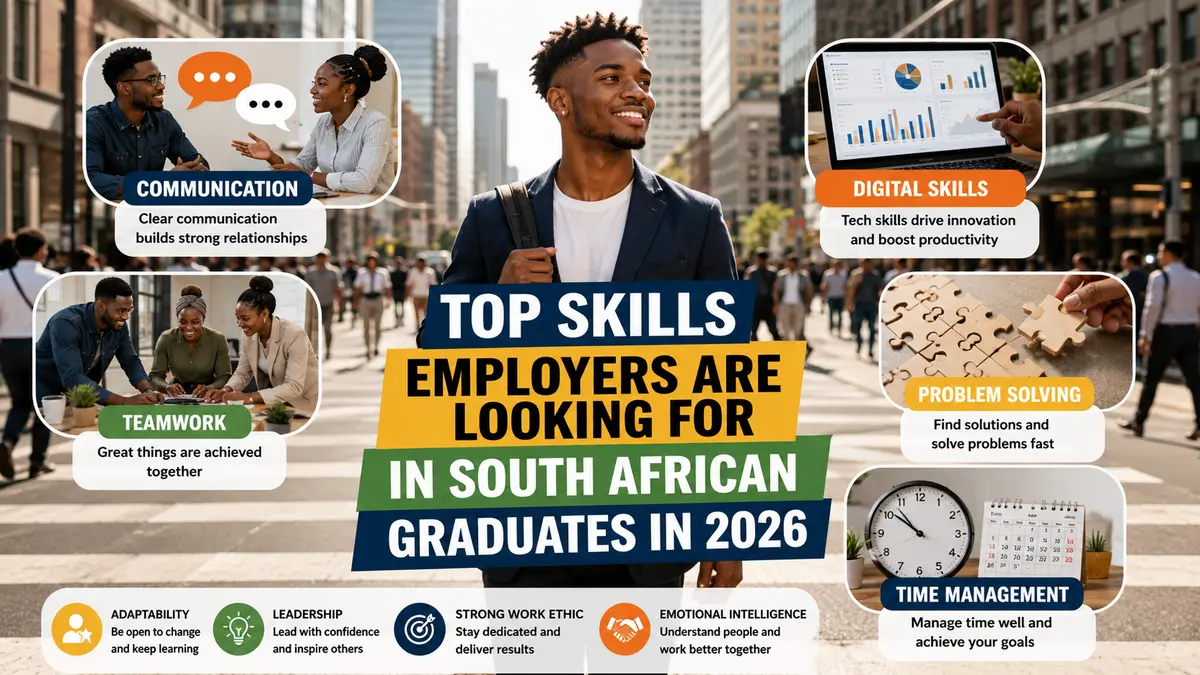
Communication is one of the biggest skills employers want. Graduates from places like University of Johannesburg often take part in presentations and group work. Speaking clearly and writing good emails matters in almost every job. Companies want people who can explain ideas and work with others.
Digital skills are growing fast in South Africa. Basic knowledge of spreadsheets, online tools, and data systems helps a lot. Courses at University of South Africa and TVET colleges often include digital learning tools. Banks, retail companies, and insurance firms look for people who can work with technology.
Problem solving is another important skill. Employers do not only want someone who follows instructions. They also want people who can think when something goes wrong. Engineering and science students at University of Pretoria often build this skill through projects and practical work.
Teamwork is also valuable in the workplace. During group assignments at University of Cape Town, students learn how to work with different people. Offices, hospitals, and business companies depend on teamwork every day. Employers want people who can cooperate and respect others.
Time management is a skill that quietly makes a big difference. Someone who balances assignments, transport, and deadlines already understands pressure. Graduates who manage time well usually adapt faster in jobs. Employers notice people who finish work without constant reminders.
Adaptability is becoming more important because jobs keep changing. New systems, new software, and new ways of working appear often. Someone who learns quickly has a better chance of growing in a company. This is one reason online learning and short courses are becoming popular.
From what I have seen, building skills while studying creates a stronger future. A degree gives knowledge, but skills help you use that knowledge in real life. Start improving one skill at a time. Small progress during university can become a big advantage after graduation.
Frequently Asked Questions
What skill do employers value the most in South Africa?
Communication and digital skills are among the most requested skills across different industries.
Can I learn these skills without a degree?
Yes. Short courses, internships, and practical experience can help build these skills.
Do TVET colleges teach workplace skills?
Yes. TVET colleges often include practical learning that prepares students for jobs.